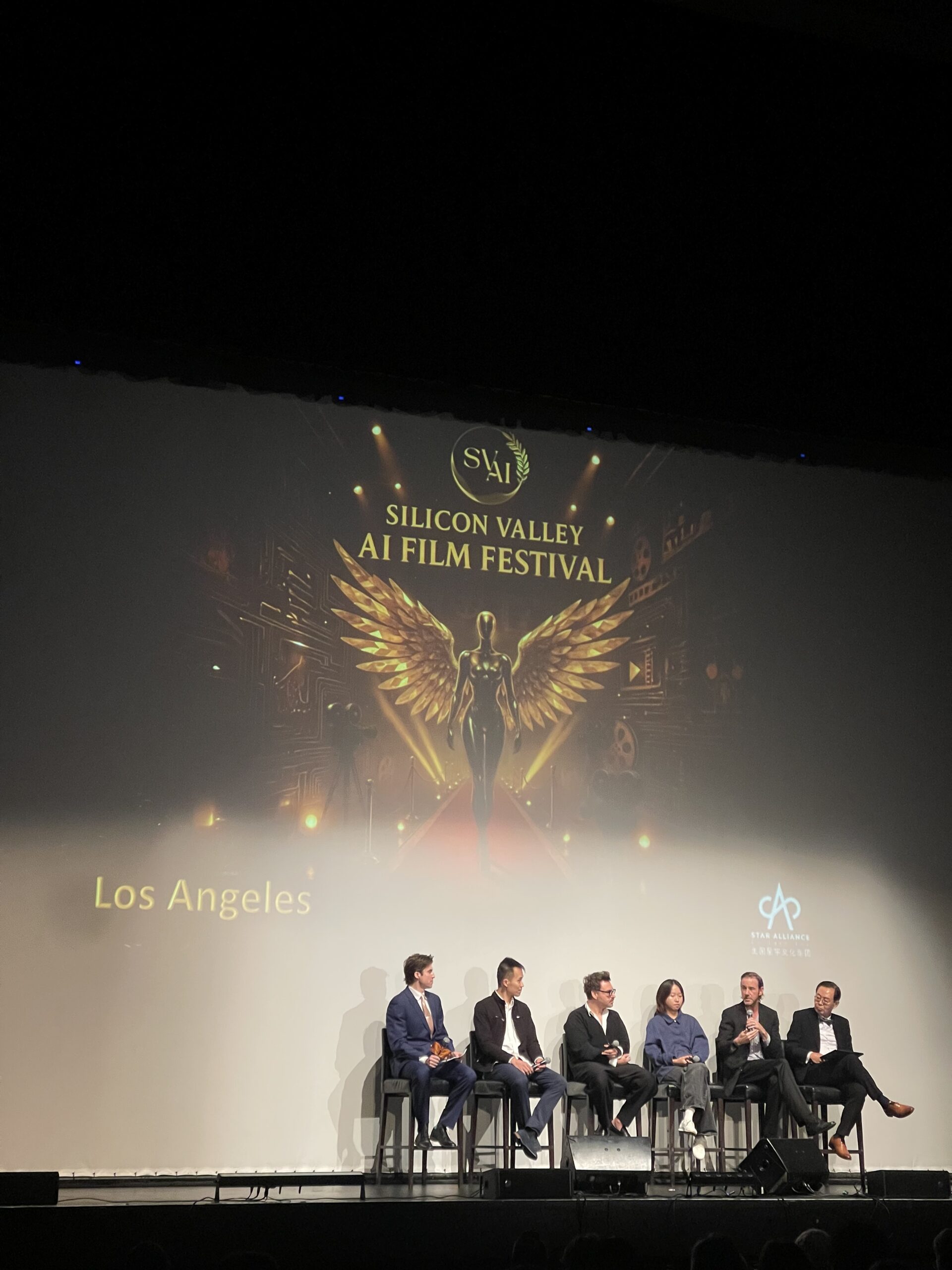
The 2026 Silicon Valley AI Film Festival (SVAIFF), presented by Star Alliance Culture Inc., brought filmmakers, investors, and technology leaders together at the Saban Theatre in Beverly Hills on November 1, 2026.
Sing Chang, CEO of Star Alliance Culture Inc. and founder of SVAIFF, joined Sarah Wang, CEO of the LA-Silicon Valley AI Film Festival, on stage to introduce the festival and deliver opening remarks.
One of the standout discussions at the festival was Panel A: Investment, AI-Native Production, Brand Strategy & IP Innovation, which explored the opportunities and challenges of AI in filmmaking, business, and creative ownership.
The Panelists
- Han Li, General Partner, Riviera Holdings VC
- Artem Petrov, Co-Founder & CEO, CopySight AI
- Wanyi Zhao, Head of Content, Storyverse AI
- Hank Leber, Stanify AI
- Dr. Hoyoung Lee, SVAIFF South Korea Consultant, AIBA-USA
What Makes an AI Project Worth Pursuing?
One of the most interesting questions was what would make each panelist turn down a project.
Wanyi Zhao made it clear that story comes first. Through Storyverse AI, she works with experienced Hollywood creatives to combine traditional filmmaking expertise with emerging AI tools. AI can reduce production costs and create environments that would otherwise require significant resources. But none of that matters if the story does not connect with the audience.
Hank Leber warned against brands using AI as a shortcut. His company uses AI to analyze customer conversations and identify valuable insights from years of social media engagement. His perspective was simple. AI should enhance creativity and human connection, not replace effort, strategy or original thinking.
Copyright, Provenance and Creative Ownership
Artem Petrov addressed one of the biggest concerns facing professional AI productions: intellectual property.
His recommendation was to document every step of the creative process, track the origins of AI-generated assets, and evaluate potential copyright infringement.
For commercial filmmaking, knowing where your material comes from is essential. Without clear provenance and documented human creative contributions, studios and filmmakers may face significant legal and financial risks.
What Investors Want From AI Startups
Han Li shared that his team has spoken with approximately 600 to 700 early-stage AI companies over the past two to three years.
What does he look for first? The founders.
Technology is only one part of the equation. Leadership, execution, and the ability to build meaningful industry relationships are critical. Li described how his firm helps promising startups develop strategic connections before committing investment capital.
South Korea and the Future of AI Production
Dr. Hoyoung Lee discussed South Korea’s expanding role in AI filmmaking and identified three competitive advantages: talent, speed, and national commitment.
Decades of investment in technology and entertainment, combined with government-supported initiatives, have positioned South Korea to move rapidly from experimentation to production.
He also highlighted the upcoming SVAIFF Korea event scheduled for December 17, 2026.
My Biggest Takeaway
After 25+ years of working in Hollywood post-production, I see AI as another addition to the filmmaker’s toolbox. AI has already been part of my workflow and software for over 10 years.
It can accelerate workflows, expand creative possibilities, and help bring ambitious ideas to life with fewer resources. But technology alone does not make a great film.
Story, craftsmanship, collaboration, and creative judgment still matter most.
The most compelling message from this panel was that filmmaking remains a business of people creating things with other people, just with new tools.
AI will continue to evolve. The challenge for filmmakers is to use it with intention, protect their work and always remember that human creativity is behind every great story.
Until Next Time,
Vashi Nedomansky, ACE